Last updated 2026-08-19
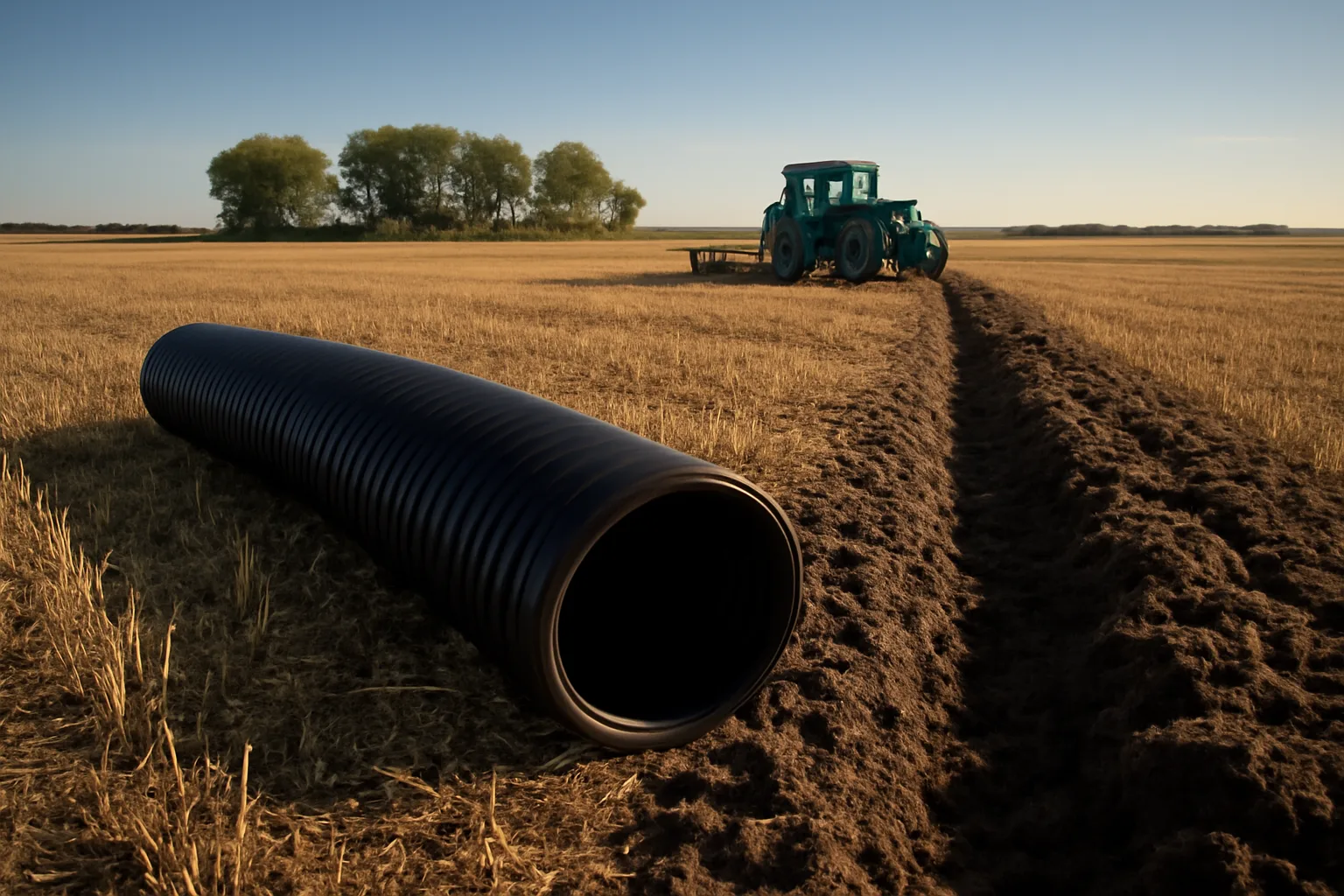
TL;DR
Colorado does not issue a statewide drainage tile license. You still need a Colorado 811 locate (at least two business days), a county check for local cards or grading, a CDPS stormwater permit if you disturb 1 acre or more, and a DWR conversation if laterals intercept tributary groundwater. Installed cost is bid per foot. On-site work is days to weeks after locates and weather line up.
What does drainage tile renewal mean in Colorado?
Drainage tile renewal in Colorado means repairing, replacing, or re-patterning subsurface drains, then matching that trench to locates, local permits, and water-administration rules. It is not a statewide license renewal. Colorado does not run a drainage-tile board.
The phrase trips people because other states wrap contractor cards into annual renewals. Here the renewal is the system in the ground and the paper that lets you open a trench without guessing. You may be pulling failed clay laterals, resetting an outlet that silted shut, or laying new patterned polyethylene on wet or saline acres. The crop problem is the same. The agencies are not.
Eastern plains fields and a few valley floors are where you actually see drainage tile Colorado crews talk about. Front Range readers picture basement waterproofing. That is a different trade, and a city can pull plumbing or waterproofing cards for it. Field tile is farm infrastructure. NRCS writes the common design language in Conservation Practice Standard 606, Subsurface Drain. That standard is a specification, not a permit and not a license.[9]
If a parcel already has laterals, treat ownership, outlet rights, and as-builts as stale until you prove them. Ditch companies change boards. Pivots move. A main that once emptied to a waste ditch may now sit on a neighbor's deed.
I would not bid a renewal until I walk the outlet and call the county. Pretty maps are cheap. A drowned outlet is not.
Do you need a license for drainage tile in Colorado?
No. Colorado does not issue a statewide license for agricultural drainage tile installation or renewal. You still may need a local contractor or excavation card if the job sits inside a city or county that licenses that work, and you still need the ordinary business, locate, and environmental paper.
The Department of Regulatory Agencies licenses many trades. General contracting and farm drainage are not statewide DORA cards. Cities such as Denver run their own contractor licensing for building work.[12] That local card does not automatically travel to a Yuma County quarter section. Ask the building department for the parcel. Do not take a forum post as the rule.
A water well construction license from the Board of Examiners of Water Well Construction and Pump Installation Contractors is real, and it is the wrong card for ordinary corrugated field laterals. That board regulates wells and pump installation.[6] If your plan intercepts and discharges groundwater, the question flips from licensing to water administration. That is a Division of Water Resources conversation, not a yellow-pages license mill.
Paying for a national drainage contractor certification will not satisfy a Colorado county or the State Engineer. I would spend that money on survey, outlet permission, and insurance.
Confirm every local card with the jurisdiction that would actually stop the job. Nobody has a single statewide checklist that replaces that call.
How much does drainage tile cost in Colorado?
Expect installed agricultural tile to be bid per foot for laterals, then plus mains, fittings, outlets, crossings, and mobilization. Colorado does not publish a statewide custom-rate survey for drainage tile. The closest annual public series is the Iowa Farm Custom Rate Survey, which tracks Midwestern installation rates and is a benchmark, not a Colorado bid.[10]
Pipe freight to the eastern plains, rock, irrigation conflicts, and long runs to a legal outlet will move your number more than a national average will. A short renewal that only resets an outlet and a few laterals can look cheap per acre and still hurt if you hit a pipeline or a county road bore.
Common cost buckets look like this.
| Item | How it is usually priced | What blows it up |
|---|---|---|
| 4-inch laterals | Per foot, installed | Tight spacing, rock, sock |
| Mains and fittings | Per foot plus each | Upsizing after a bad design |
| Outlet and animal guard | Per each | Right-of-way, riprap, ice |
| Utility crossings | Per crossing | Pipelines, fiber, county road |
| Grade control and mapping | Per job | Re-work from a bad laser setup |
| Mobilization | Per move | Small scattered fields |
Nobody has a clean Colorado-only installed-cost study I trust. Treat any website that posts a single statewide price as marketing. Get two local quotes and walk both outlets.
I would not buy a second plow before I had a season of outlet and locate costs on paper. Iron is fun. Freight and crossings are what kill a first-year bid.
How long does drainage tile take in Colorado?
On-site trenching for a typical field often runs a few days to a couple of weeks after you are legally cleared to cut. The full calendar is longer because Colorado 811 notice is at least two business days, weather and frost stop plows, and any wetland or water-right review has no honest public clock you should bet a planting date on.[4]
Frozen ground on the plains can shut a chain trencher down while a plow might still move, or the opposite if the frost line is ugly. Spring mud is real. Summer irrigation schedules can block you from an open waste ditch. None of that is a state processing queue. There is no tile-permit timer on a DORA dashboard.
Linear footage, pattern density, rock, and how many crossings you have will dominate the machine hours. A small outlet repair can be a one-day job. A full pattern on a half section is a different season.
Do not let a salesperson quote two weeks, guaranteed, permit included. Confirm locate windows and local permit timing with the people who actually stamp them. I would put weather slack in the contract and refuse damages tied to a planting date I do not control.
Variable processing times belong to the agency that owns the form. Confirm them there. This site does not promise approvals or dates.
What permits actually show up on a Colorado tile job?
Most jobs trip a Colorado 811 locate. Many trip a local grading or right-of-way check. Disturb 1 acre or more and you are in construction-stormwater territory under the federal NPDES rule Colorado administers.[2] Hit waters of the United States and you may need a U.S. Army Corps of Engineers review.[8] Intercept tributary groundwater and you call the Division of Water Resources.[7]
Here is the working checklist I would actually use.
| Check | Typical trigger | Who confirms |
|---|---|---|
| Utility locate | Any excavation | Colorado 811 |
| Construction stormwater | 1 acre or more disturbed, or a common plan | CDPHE (CDPS) |
| Local contractor or grading | City or county rule, road approach | County or city building |
| Section 404 / wetlands | Dredge or fill in jurisdictional water | USACE district |
| Water administration | New withdrawal or discharge of tributary water | DWR |
| Ditch or drain outlet | Use of a company ditch or waste | Ditch company |
Agricultural work is not a magic shield. It can narrow the stack. It does not erase 811. It does not erase a county road bore. Confirm every line on that table for the parcel. Forms change. I would screenshot the current page the day I file.
If the outlet needs a highway culvert tap, add CDOT. That one alone can outlast the plow work.
Does Colorado water law treat drainage tile like a well?
Sometimes the water is the real permit, not the trench. Colorado runs prior appropriation. Tributary groundwater is administered with surface water. A well is a regulated structure. A field tile system that collects and dumps tributary groundwater can raise the same kind of administration questions even when nobody calls it a well.[11][14]
The Division of Water Resources permits wells and enforces well-construction rules through the Board of Examiners.[6][7] Ordinary agricultural laterals are not automatically well construction. Do not assume the opposite either. If you are lowering a water table and discharging to a drain, ask DWR in the division where the land sits. Get the answer in writing.
CSU's Colorado Water Knowledge pages walk through prior appropriation in plain language if you are new to the state.[11] They will not stamp your job. They will keep you from saying something foolish in a landowner meeting.
Out-of-state crews treat tile like a Midwest pattern-tile commodity and skip this call. That is how you buy a lawyer. If the landowner already has a well permit, an augmentation plan, or a decree that mentions drainage, read it before you design the main.
Confirm current well definitions and permit thresholds with DWR. Do not treat this article as a determination. It is reference reporting, not legal advice.
What does Colorado 811 require before you trench?
You must notify Colorado 811 at least two business days, not including the day you call, before excavation begins, under Colorado's damage-prevention law in Title 9.[4][5] White-line the proposed trench. Wait for marks. Maintain them. Hand-dig the tolerance zone the law and the operators require.
Colorado 811 notice must go out at least two business days before excavation under C.R.S. Title 9.[4]
Tile plows cut fast and blind. Rural does not mean empty. Fiber, petroleum, rural water, and irrigation signal cable sit in places that surprise people. A sentence that starts with the farmer said nothing is there will not impress an investigator after you peel a coated steel line.
Colorado 811 is the notice process. It is not a design review and it is not permission to outlet water. If marks do not show or a utility fails to respond, follow the statute and the 811 instructions. Do not freelance.
I would photograph the white line and the marks before the plow starts. Memory is a poor exhibit.
When does a stormwater permit kick in for tile work?
A construction stormwater permit is required for construction activity that disturbs 1 acre or more, and for smaller disturbances that are part of a larger common plan of development or sale. EPA states that "The NPDES stormwater program requires permits for discharges from construction activities that disturb one or more acres, and discharges from smaller sites that are part of a larger common plan of development or sale."[2] Colorado runs that duty through its CDPS construction stormwater general permit. Confirm the current form and SWMP rules with CDPHE before you disturb ground.
EPA requires NPDES construction stormwater coverage when construction disturbs 1 or more acres.[2]
Pattern tile on a quarter section will blow past 1 acre of disturbance if you count the trench network the way an inspector counts it. A one-day outlet repair on a tenth of an acre may not. Linear project rules can apply. I am not going to pretend a blog can classify your site.
I would rather file and keep a simple SWMP in the truck than argue acreage after a complaint. Fees and processing times change. Confirm them on the current CDPHE permit page. No approval timing is promised here.
Do wetlands and 404 rules still apply to farm tile?
Yes, they can. Clean Water Act section 404 regulates dredge and fill in waters of the United States.[3] EPA's exemptions page tracks the statute on "normal farming, silviculture, and ranching activities such as plowing, seeding, minor drainage, and harvesting for the production of food, fiber, and forest products, or upland soil and water conservation practices."[1][3] Maintenance of currently serviceable drainage structures has its own exemption language. Exemptions fail if you convert a water to a new use or do more than maintain what is already there. That recapture idea is why it is a farm is not a complete answer.
New patterned tile through a jurisdictional wetland is a different animal than jetting a main that has been there since the 1970s. Eastern Colorado playas and valley sloughs are where crews get surprised. The Omaha District covers much of eastern Colorado regulatory work. Other corners of the state sit in other districts.[8]
If you do not know whether the swale is jurisdictional, stop and ask the Corps. A bad guess is more expensive than a week of waiting.
I would not sell a landowner a 404 exempt stamp. You are not the Corps.
How do you set up the business paper in Colorado?
File a business entity with the Colorado Secretary of State if you are operating as something other than your own name, then handle tax accounts and, if you hire anyone, workers' compensation and wage rules. There is no drainage-tile professional license to hang next to that filing.
Local business licenses exist in some municipalities. A shop in a city can trip those even when the fields are unincorporated. Insurance is not optional if you have any assets you like. Utility-damage and crop-loss claims are how this work gets expensive.
If you keep employees, confirm workers' compensation with the Colorado Division of Workers' Compensation. Sole operators without employees sit in a different spot. Confirm it. Do not copy a social thread.
I would keep a job folder with the 811 ticket, landowner access, outlet permission, and as-built grades. That folder is the renewal. A laminated certified tiler card from a website is not.
A fake national license is a waste. Grade notes and outlet records are not. If you want a simple Grade + GPS Plow + Outlet paper kit to structure those field notes, DrainageTilePath sells a $179 one-time Grade + GPS Plow + Outlet Kit. It is a checklist, not a state credential.
What should you confirm with the county before you mobilize?
Call the building department for the county where the field sits and ask, by parcel, whether they want a contractor license, a grading permit, or a road-approach permit for your outlet. Then call the ditch company or drain owner if water will leave the farm through their prism.
County ag exemptions for farm buildings do not automatically cover a new outlet through a county right-of-way. Floodplain administrators show up on some corridors. None of this is listed on a national tile forum.
Bring a sketch with laterals, the main, the outlet, and any wetland signature you can see on aerials. Ask what they want in writing. Write down the person's name and the date.
Neighbor easements matter when a main has to cross a fence line. A handshake from 1998 is not a recorded easement. I would not plow a crossing on a promise.
Compare the stack with drainage tile renewal in idaho or drainage tile renewal in arizona if you also work those states. Western water paper does not copy cleanly, but the habit of calling the ditch company does.
How does Colorado compare with other states on tile paper?
Colorado is lighter on contractor licensing and heavier on water administration than a Corn Belt state. Illinois will feel more like a contractor-and-drainage-district world. Colorado will feel like 811, stormwater, and the State Engineer. That is the real difference, not climate.
| Topic | Colorado | Typical Corn Belt pattern |
|---|---|---|
| Statewide tile or GC license | No statewide tile license | Often local or state contractor rules |
| Utility locate | 811, two business days | 811, wait times vary by state |
| Water | Prior appropriation, DWR | Drainage districts, less well-permit overlap |
| Wetlands | 404 still in play | 404 still in play |
| Published install prices | No state survey | Custom-rate surveys exist |
If you want the heavier paper states, read drainage tile renewal in illinois and drainage tile renewal in california. For other state stacks in this series see drainage tile renewal in arkansas and drainage tile renewal in alabama.
I would not copy an Illinois drainage-district playbook onto a South Platte farm and call it done. Different water religion.
NRCS EQIP in Colorado can fund Conservation Practice 606 when the ranking and resource concern fit. Payment schedules change. Confirm current eligibility with Colorado NRCS, not with a blog archive.[13]
DrainageTilePath is independent of the boards named above. Start at /start if you want the kit. Confirm every current form, fee, and timing with the agency that issues it. No approval is promised.
Frequently asked questions
Do you need a license for drainage tile in Colorado?
No statewide drainage tile license exists. Some cities and counties license contractors or excavators for work inside their limits, so ask the building department for the parcel. A water well construction license covers wells, not ordinary field laterals. Confirm local cards before you mobilize. A national certificate does not replace that call.
How much does drainage tile cost in Colorado?
Jobs are usually bid per foot for laterals, plus mains, outlets, crossings, and mobilization. Colorado does not publish a statewide tile custom-rate survey. The Iowa Farm Custom Rate Survey is the closest annual public benchmark, not a local quote. Freight, rock, and outlet distance move Colorado prices. Get two on-the-ground bids.
How long does drainage tile take in Colorado?
Machine time on a typical field is often a few days to a couple of weeks after you are cleared to cut. Add at least two business days for 811, plus weather, frost, irrigation schedules, and any wetland or DWR review. There is no statewide tile-permit clock. Confirm local timing with the office that stamps the form.
Is a Colorado well license required to install field tile?
The Board of Examiners licenses water well construction and pump installation, not typical corrugated agricultural laterals. If the system intercepts and discharges tributary groundwater, you still need a water-administration answer from the Division of Water Resources. Ask the division office for the land. Get it in writing.
Do I need a permit just to replace old clay tile?
Replacement can be lighter than a new pattern, but 811 still applies to the excavation. Maintenance of a currently serviceable drain may fit a 404 exemption. Conversion or expansion may not. Stormwater coverage still turns on disturbed acres. Confirm the specific trench with USACE, CDPHE, and the county, not with a rule of thumb.
Who do I call for a utility locate on a Colorado farm?
Notify Colorado 811 at least two business days, not including the day of the call, before excavation. White-line the route and wait for marks. Rural ground still holds fiber, fuel, rural water, and irrigation cable. 811 is a locate process, not outlet permission and not a design review.
Can I outlet new tile into an irrigation ditch?
Only with permission from whoever owns or administers that prism, and only if the discharge does not create a water-administration problem. Ditch companies and waste-ditch owners set their own rules. A historic handshake is not current consent. Get the outlet in writing before you size the main.
Does EQIP pay for subsurface drains in Colorado?
NRCS lists Subsurface Drain as Conservation Practice 606, and Colorado EQIP can fund practices when ranking and resource concerns fit. Payment rates, caps, and eligible land change. Confirm the current schedule and signup with Colorado NRCS. Do not bid a job on an old payment table.
What pipe is typical for drainage tile Colorado jobs?
New agricultural laterals are almost always corrugated polyethylene, often socked in fine soils, with dual-wall more common on mains. Old systems may still be clay or concrete. Size and spacing come from soils, grade, and outlet capacity, not from a statewide code book. NRCS Practice 606 is the usual design language.
Are there drainage districts I have to deal with?
Colorado statutes in Title 37 still provide for drainage and related districts. Many parcels are not inside an active district. If one is mapped on the land, that board can add assessments or outlet rules. Ask the county and the landowner, then confirm with the district if one exists.
Do I need workers' compensation to run a tile crew?
If you have employees, confirm coverage with the Colorado Division of Workers' Compensation before you put them on a plow. Sole operators without employees sit in a different spot. Rules turn on how you actually staff the job. Confirm current employer duties with that division, not with a forum post.
Is GPS grade required by Colorado law?
No statute requires GPS for agricultural tile. Grade that actually falls is still the job. On rolling plains a GPS plow setup saves re-work a single laser move can miss. Law cares about locates, water, and fill. The crop cares about outlet elevation and a main that keeps falling.
What if the field sits in a floodplain or next to a playa?
Floodplain local rules and Clean Water Act jurisdiction can both attach. Playas and sloughs are where 404 surprises happen. Ask the county floodplain administrator and the correct USACE district before you pattern through a wet signature. A farm label does not finish that review.
Where do I confirm current Colorado forms and fees?
Confirm 811 process with Colorado 811 and Title 9, stormwater forms with CDPHE, well and groundwater questions with DWR, wetlands with the USACE district, and contractor cards with the city or county building department. Fees and processing times change. This article does not freeze them and does not promise approval.
Sources
- U.S. EPA, Exemptions to Permit Requirements (CWA 404): Normal farming activities including minor drainage, and maintenance of certain drainage structures, can be exempt from section 404 permits, with recapture limits.
- U.S. EPA, Stormwater Discharges from Construction Activities: NPDES construction stormwater coverage is required for construction that disturbs one or more acres, and for smaller sites in a larger common plan.
- U.S. Code, 33 U.S.C. § 1344 (Clean Water Act section 404): Section 404 regulates dredged or fill material in waters of the United States and states the farming and minor-drainage exemption text.
- Colorado General Assembly, Colorado Revised Statutes Title 9 (Safety): Colorado's damage-prevention law in Title 9 requires excavators to give 811 notice at least two business days before excavation.
- Colorado Division of Oil and Public Safety, Damage Prevention: Colorado administers underground damage-prevention compliance tied to the 811 locate process.
- Colorado Division of Water Resources, Well Construction and Inspection: The Board of Examiners licenses water well construction and pump installation contractors in Colorado.
- Colorado Division of Water Resources, Well Permitting: DWR administers well permits and related groundwater administration questions.
- U.S. Army Corps of Engineers Omaha District, Colorado Regulatory: Omaha District handles Clean Water Act regulatory review for much of eastern Colorado.
- Iowa State University Extension, Iowa Farm Custom Rate Survey (Ag Decision Maker A3-10): The Iowa Farm Custom Rate Survey is a published annual series that includes drainage tile installation rates used as a Midwest benchmark.
- Colorado General Assembly, Colorado Revised Statutes Title 37 (Water and Irrigation): Title 37 is the statutory home for Colorado water administration, wells, and drainage and irrigation district law.