Last updated 2026-08-19
TL;DR
Florida issues no drainage tile renewal license. Paid install work can fall under chapter 489, so confirm certified or registered status with DBPR and your county before you advertise. File Florida 811 at least 2 full business days before you dig. Some farm topography work is exempt under section 373.406, but that door is narrow. Costs and calendars are job specific. Confirm every fee with the board.
What does drainage tile renewal actually mean in Florida?
People type this like Florida runs a sticker program for farm pipe. It does not. No renewal card, no state tile stamp, no quota on laterals.
What you are usually doing is simpler and messier than the phrase sounds. You are replacing laterals or an outlet on ground that already sheds water. You are adding subsurface pipe so a field can drop its water table after rain. Or you are trying to keep your contractor paper clean so you can bid the next block.
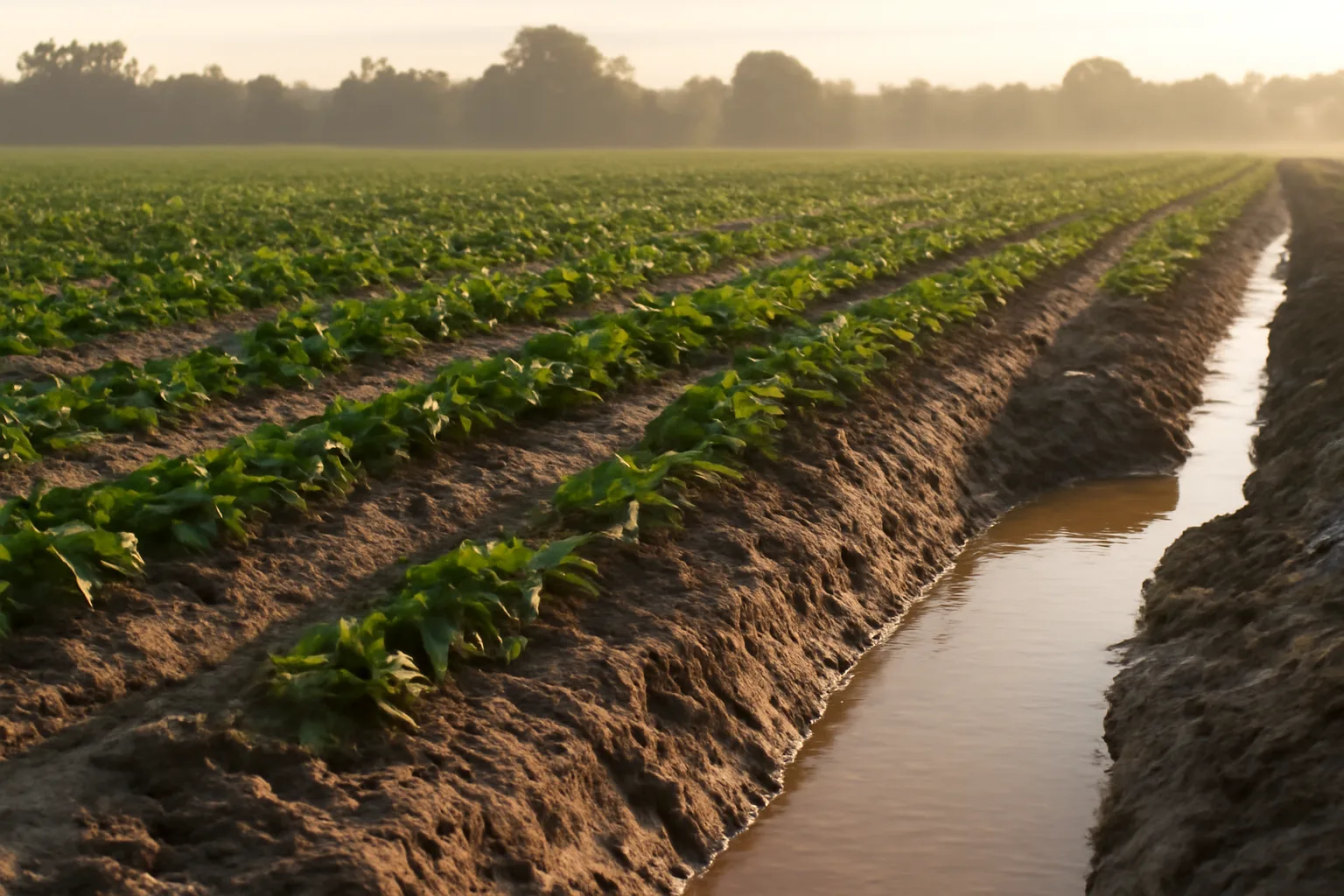
Florida fields do not behave like a Midwest grid. A lot of water control here is ditches, raised beds, seepage irrigation, canals, and pump stations. Classic clay pattern tile is uncommon. Plastic laterals show up in vegetables and some specialty ground. South Florida sugarcane country still runs on canals more than on 4-inch pipe.
Renewal, on this page, means the paper path when you go back into a drained field. License questions. 811 tickets. Water management district calls. BMP files. Outlet grades. That is the real work. The trench is the easy part on a good day.
If a national blog told you to just tile it, close that tab. Florida paper is local. The board will not honor a meme.
Do you need a license for drainage tile in Florida?
Maybe. Florida does not license drainage tile as its own trade. If you contract to install or replace pipe in the ground for someone else, chapter 489 can still treat you as a contractor.[3]
The statute is blunt. "No person who is not certified or registered shall engage in the business of contracting in this state." That sentence lives in Florida Statute 489.113.[3] Certified people work statewide after they finish the exam path. Registered people work where the local jurisdiction lets them.
Underground utility and excavation is the class most people check first. The definition in Florida Statute 489.105 talks about storm sewer collection systems and open excavations.[1] Farm laterals are not a clean match. Some counties treat any buried drainage pipe for hire as underground utility work. Some shrug if the job stays on a farm. I would not guess. Get it in writing from DBPR and from the county building official who actually owns that site.
There is a small-job escape hatch. Casual, minor work under a $2,500 aggregate contract price can sit outside chapter 489. The hatch slams shut if the job is a slice of a larger project, or if you advertise as a contractor.[2] Advertising is how people blow this.
Owner-builder language in the same chapter is written mostly around residences, not an 80-acre vegetable block. Confirm that box before you lean on it. Never treat a phone call as a determination.
If you already hold a construction license, renewal is a 14 hour continuing education grind every 2 years under Florida Administrative Code 61G4-18.001.[8] The hour split is in the chart. Confirm the live renewal fee with DBPR. Fees move. I will not invent one.
Which Florida contractor license covers drainage tile work?
The closest state class is underground utility and excavation. Florida Statute 489.105 limits that contractor to construction, installation, and repair of main sanitary sewer, main water, and storm sewer collection systems, including open excavations and trenchless methods.[1] Tile laterals on a farm sit in a gray band next to "storm sewer."
I would not build a business plan on that gray band. Ask DBPR, in writing, whether your scope counts as contracting. Ask the county the same question. Those two answers can disagree. Believe the stricter one until you have paper that says otherwise.
Statewide certified status is the cleaner path if you plan to cross county lines. Registration is local. Florida Statute 489.113 splits those two tracks.[3] Exams, experience affidavits, financial responsibility, and background checks all sit on the application. Confirm every current item on the live DBPR checklist. Do not copy a blog fee table.
A lot of first-year operators waste money chasing a full certified underground utility path before they know whether their county even treats farm laterals as contracting. The opposite waste is advertising tile installation with no determination at all. Pick the written answer, then spend.
Local business tax receipts, workers compensation, and general liability are separate from the CILB card. They still show up when a grower or a district asks who you are.
How much does drainage tile cost in Florida?
Nobody publishes a clean Florida-only installed cost per foot. That is the honest sentence. Midwest custom rate surveys exist, and Iowa State University Extension runs one of the better annual series, but those numbers describe Iowa soils and Iowa gravity outlets, not a flat Florida water table.[12]
What you can price with a straight face is the stack of line items. Dual-wall or single-wall corrugated PE. Freight to the peninsula. Boots and teeth if you hit lime rock or shells. Dewatering. A legal outlet. A pump if gravity will not work, which is common on this terrain. Filter fabric or sand if the soil will move. Survey and grade control. 811 delays. If an environmental resource permit is in play, add engineering and the district clock.
I would not trust a national per-acre quote on a Florida job. High water tables and pumped outlets change the bid. A pretty Midwest dollar-per-acre number is a waste of money as a Florida estimate.
If you want a single packet that walks grade, GPS plow setup, and outlet layout, DrainageTilePath sells a $179 one-time Grade + GPS Plow + Outlet Kit at /start. Use it as a field checklist, not as a license.
Material prices move with resin and freight. Confirm pipe quotes the week you buy, not the week you sketched the main. Labor follows the water table. Wet winter windows cost more because you fight the hole.
How long does drainage tile take in Florida?
There is no state clock for a tile job. Anyone who promises a board date is selling smoke.
The only fixed number you can take to the field is the 811 wait. Florida Statute 556.105 says an excavator shall provide notice "not less than 2 full business days before beginning any excavation or demolition that is not beneath the waters of the state." Work beneath the waters of the state needs 10 full business days.[6]
After tickets clear, production is a crew, a machine, and the water table. A plow in open sand can look fast. A trench in saturated organic soil with a canal outlet can crawl. I will not invent feet per day. Your operator and your dewatering setup set that number.
Permits, if required, sit on a different calendar. Water management districts do not publish a single statewide decision day you can drop into a contract. Confirm the current process with the district that owns your basin. No approval guarantee belongs in a bid letter.
License applications, if you need one, have no honest public stopwatch either. DBPR processing moves. Confirm status in your account. Build slack.
A practical sequence looks like this. Confirm license status. Pull 811. Walk the outlet. Decide if 373.406 even applies. Then cut dirt. Skipping the first four steps to save a week is how jobs stall for a month.
Do you need a water management district permit to renew tile?
Sometimes. Florida Statute 373.413 says a permit is required before construction, alteration, operation, maintenance, abandonment, or removal of any stormwater management system, dam, impoundment, reservoir, appurtenant work, or works, except for listed exemptions.[5]
Rule 62-330.020 is the companion rule that says which activities are regulated under the statewide environmental resource permit program.[11] Rule 62-330.051 lists exempt activities.[9] Read both before you tell a grower you do not need paper.
Replacing a lateral in the same trench, same size, same outlet, is the fact pattern people hope is maintenance. New mains, new connections to a canal, new pumps, wetland edges, and any redesign of how water leaves the property are how that hope dies. I would call the district with a sketch, not a vibe.
Florida has five water management districts. The one on your tax bill is the one you call. South Florida, Southwest Florida, St. Johns River, Suwannee River, and Northwest Florida do not share a single reviewer. Do not mail the wrong office and wait.
Disturb one acre or more and construction stormwater coverage under Florida's Construction Generic Permit can also appear, even when the farm thinks of the work as agriculture. Confirm the acreage trigger and the current form with FDEP. I will not invent a processing time.
What does Florida 811 require before you open a trench?
You notify Sunshine 811 before you excavate. Florida Statute 556.105 is the procedure statute. For ordinary land work, notice is not less than 2 full business days. For excavation beneath the waters of the state, it is not less than 10 full business days.[6]
That is a board-confirmable fact you can put on a whiteboard. Florida Statute 556.105 requires notice not less than 2 full business days before beginning excavation that is not beneath the waters of the state.
Farm fields still have fiber, gas, power, and old irrigation mains. I have no patience for the "it is just a field" skip. The ticket is cheaper than a line hit.
Mark your white lines. Wait the full business days. Respect the locate marks. If a locator does not show, follow the statute and the Sunshine 811 process. Do not freelance.
Renewal work on an old farm is where people get sloppy because they "know" the laterals. You do not know what a telecom crew buried in 2014. Call.
How do the Chapter 373 agricultural exemptions actually work?
They are real. They are also narrower than the coffee-shop version.
Florida Statute 373.406(2) says "nothing herein, or in any rule, regulation, or order adopted pursuant hereto, shall be construed to affect the right of any person engaged in the occupation of agriculture, silviculture, floriculture, or horticulture to alter the topography of any tract of land" for purposes consistent with that occupation.[4] The next sentence is the one people skip. The alteration may not be for the sole or predominant purpose of impeding or diverting the flow of surface waters or adversely impacting wetlands.[4]
If your "tile renewal" is really a new ditch pattern that shoves water onto a neighbor or into a wetland, you are outside the blessing. If you are a contractor who does not farm the tract, do not wear the grower's exemption like a rented jacket. The statute talks about a person engaged in the occupation.
I would still make the district call. Exemptions are defenses, not hall passes you print at home. Keep the crop history, the old as-built if it exists, and a simple plan that shows you are not inventing a new discharge.
Rule 62-330.051 sits next to the statute for smaller exempt activities.[9] Use it as a checklist, then confirm. Nobody has a public dataset on how often farm tile jobs get an ERP in Florida. The closest honest move is a district pre-app, not a forum post.
What paper do FDACS BMPs create for farm drainage work?
Florida's agricultural best management practices program is water-quality paper, not a construction license. Florida Statute 403.067 builds the BMP track and the presumption of compliance when a producer enrolls and implements the manual for that commodity.[7]
Enrollment does not replace chapter 489. It does not replace 811. It does not automatically replace an environmental resource permit. It is the file a grower keeps to show they are running the state's water-quality playbook.
If you are the installer, ask whether the farm is enrolled and which manual they follow. Vegetable, citrus, cow-calf, and sugarcane manuals are not interchangeable. Drainage and water-table practices show up in those manuals as production tools. Your as-built should match what the grower will claim.
I would keep outlet photos, GPS lines, and a one-page grade note in the job folder. When a basin goes into a BMAP fight, people suddenly want records. You will not get a second chance to invent elevations.
Confirm current enrollment steps with FDACS. Do not quote a fee or a processing time from memory.
How do you renew a Florida contractor license if you hold one?
You renew through DBPR on the cycle the board assigned to that license. I will not invent the fee or the due date. Pull both from your myfloridalicense account.
Florida Administrative Code 61G4-18.001 requires 14 hours of continuing education during each 2-year period for registered and certified contractors.[8] Inside those 14 hours, the rule sets 1 hour of workplace safety, 1 hour of business practices, 1 hour of workers compensation, and 1 hour of laws and rules.[8] Florida Administrative Code 61G4-18.001 requires 14 hours of continuing education during each 2-year period.
Miss the CE and the renewal gets ugly. Late status and null-and-void status are real board outcomes. Confirm the exact late path with DBPR if you are already behind. Do not bid work on a dead number.
CE hours are not a substitute for a scope determination. A current underground utility card still does not answer whether this farm lateral is contracting. You can hold a valid license and still be in the wrong class.
If you do not hold a license and the county says you need one, you are in application land, not renewal land. Different forms. Different money. Confirm the checklist the day you start it.
What trench safety rules apply on a Florida tile job?
OSHA still applies in a Florida field. 29 CFR 1926.652 says each employee in an excavation shall be protected from cave-ins by an adequate protective system unless the excavation is entirely in stable rock, or it is less than 5 feet deep and a competent person finds no sign of a potential cave-in.[10]
Sandy walls and a high water table are not your friends. A 4-foot hole that looks harmless at 8 a.m. can slough after a seepage line fills. I would rather spend on a box than on a funeral.
Dewatering changes the soil. So does a passing pump cycle on a neighboring canal. Re-inspect. The competent person is a named job, not a nickname.
Utility strikes sit right next to cave-ins on the stupid-way-to-die list. That loops back to the 2 full business day notice in Florida Statute 556.105.[6]
If you are new, hire someone who has actually set a trench box in saturated sand. Watching Midwest plow videos is not training.
How is Florida tile country different from the Midwest, and what do you confirm before you bid?
Florida is flat, wet, and district-driven. Gravity outlets are a gift, not a default. Pump stations and canals do work that a 10-inch main would do in Illinois. If you want the Midwest paper contrast, read drainage tile renewal in Illinois next. Neighbor states have their own contractor maps too. Drainage tile renewal in Georgia and drainage tile renewal in Alabama are the ones Florida crews actually cross.
| Question | Florida | Typical Midwest tile state |
|---|---|---|
| What you renew | Outlets, laterals, pumps, district paper | Pattern laterals into a county ditch |
| Core license question | Chapter 489 certified or registered contractor | Often a different local mix |
| Dig notice | 2 full business days (10 if beneath state waters) | State one-call, different clocks |
| Water paper | District ERP, 373.406 exemption, FDACS BMPs | Drainage district or county drain code |
| Hydrology | High water table, canals, pumps | Gravity to a legal ditch |
Before you bid, confirm five things with living humans and keep the emails. One, does DBPR treat this scope as contracting. Two, does the county agree. Three, which water management district owns the basin and whether 373.406 even applies. Four, 811 ticket timing on your start date. Five, the live fee on any license or permit you actually need.
I would also read drainage tile renewal in Arkansas if you work river-bottom ground, and drainage tile renewal in California or drainage tile renewal in Arizona if you bounce between irrigated deserts and Florida winters. Different paper. Same habit. Confirm with the board.
DrainageTilePath is an independent publisher, not a law firm and not a service company. Nothing here is a determination. If you want the grade and outlet packet, it is at /start.
Frequently asked questions
Do you need a license for drainage tile in Florida?
Florida has no drainage tile license. Paid work can still be contracting under chapter 489, which requires a certified or registered contractor. Underground utility and excavation is the class people check first. Counties disagree on farm laterals. Get a written read from DBPR and the local building official before you advertise.
How much does drainage tile cost in Florida?
There is no solid public Florida-only installed cost series. Midwest custom rate surveys exist, but they describe different soils and gravity outlets. Price pipe, freight, rock, dewatering, the outlet, and any pump as separate lines. A national per-acre quote makes a weak Florida bid. Confirm material prices the week you buy.
How long does drainage tile take in Florida?
The only fixed statutory wait is Florida 811. You give at least 2 full business days of notice before ordinary excavation, and 10 full business days if the work is beneath the waters of the state. Crew speed after that depends on water table, outlets, and rock. District and DBPR clocks are not something to promise. Confirm both.
Is farm tile exempt from Florida contractor licensing?
Not automatically. Chapter 489 has a casual-work exemption under a $2,500 aggregate contract price, and it dies if you advertise as a contractor or slice a larger job. Agricultural status does not, by itself, erase contracting rules. Confirm exemptions in Florida Statute 489.103 with DBPR and the county.
Do I need an Environmental Resource Permit to replace old laterals?
Replacement in kind can be maintenance. New mains, new canal ties, new pumps, or wetland impacts can trigger an ERP under Florida Statute 373.413 and chapter 62-330. Section 373.406 may exempt some agricultural topography work, but the exemption is fact specific. Call the water management district with a sketch.
How far ahead do I call 811 in Florida?
Not less than 2 full business days before you begin excavation that is not beneath the waters of the state. If the excavation is beneath the waters of the state, the statute says not less than 10 full business days. That is Florida Statute 556.105. White-line the site and wait the full count.
Does FDACS BMP enrollment replace a permit?
No. Enrollment under Florida Statute 403.067 is water-quality paper for the producer. It can support a presumption of compliance with certain water-quality standards when the manual is implemented. It does not replace chapter 489, 811, or an ERP. Ask which commodity manual the farm follows and keep as-builts that match it.
What license do underground utility contractors hold in Florida?
They hold a certified or registered underground utility and excavation contractor credential under chapter 489. The definition lives in Florida Statute 489.105 and covers sanitary, water, and storm systems plus open excavation and trenchless work. Whether farm tile fits is a board and county question. Confirm before you print shirts.
How often do Florida contractor licenses renew?
On a 2-year continuing education cycle. Rule 61G4-18.001 requires 14 hours each period, including 1 hour each of workplace safety, business practices, workers compensation, and laws and rules. Confirm your exact expiration and the current renewal fee in your DBPR account. Do not bid on a lapsed number.
Can a landowner install their own tile without a license?
Owner exemptions in chapter 489 are real and built mostly around residential owner-builder facts. A commercial farm block is a different story. 811 still applies if you excavate. Water statutes still apply if you alter works or wetlands. Confirm the owner path with DBPR and the district before you rent a trencher.
Is clay tile common in Florida?
No. Classic clay pattern tile is a Midwest habit. Florida water control is more often ditches, beds, seepage systems, canals, and pumps. Plastic laterals appear in some vegetable and specialty fields. If someone is selling you a full clay-tile restoration story on Florida sand, ask for the as-built from the last century.
Do I need NPDES coverage if I disturb more than an acre?
Often yes. Florida's Construction Generic Permit can apply when construction activity disturbs one acre or more, including a larger common plan. Farm jobs still trip this when the disturbed area is real. Confirm acreage, exemptions, and the current FDEP form. Do not invent a filing time in the contract.
Which water management district do I call?
Call the district that governs that parcel. Florida uses South Florida, Southwest Florida, St. Johns River, Suwannee River, and Northwest Florida. Your tax bill and the district map beat a guess. Take a simple plan, the outlet location, and any old permit numbers. Ask whether 373.406 is even on the table.
What happens if I advertise as a contractor under the $2,500 exemption?
The casual, minor-work exemption in Florida Statute 489.103 does not apply to a person who advertises as a contractor or claims to be qualified to contract. The $2,500 cap also fails if the small contract is a piece of a larger operation. Advertising is the unforced error. Stay quiet or get licensed.
Sources
- Florida Senate, Statute 489.105 (2023): Defines underground utility and excavation contracting as installation and repair of sanitary, water, and storm sewer systems by open excavation and other means.
- Florida Senate, Statute 489.103 (2023): Exempts casual, minor work under a $2,500 aggregate contract price unless the job is part of a larger operation or the person advertises as a contractor.
- Florida Senate, Statute 489.113 (2023): No person who is not certified or registered shall engage in the business of contracting in Florida; certified work is statewide and registration is local.
- Florida Senate, Statute 373.406 (2023): Preserves the right of a person in agriculture, silviculture, floriculture, or horticulture to alter topography consistent with that occupation, unless the sole or predominant purpose is impeding surface waters or harming wetlands.
- Florida Senate, Statute 373.413 (2023): A permit is required before constructing, altering, operating, maintaining, abandoning, or removing a stormwater management system or works, except for listed exemptions.
- Florida Senate, Statute 556.105 (2023): Excavators must give the one-call system notice not less than 2 full business days before ordinary excavation, and not less than 10 full business days if the work is beneath the waters of the state.
- Florida Senate, Statute 403.067 (2023): Establishes the agricultural BMP implementation track used for water-quality compliance presumptions when producers enroll and implement the applicable manual.
- Florida Administrative Code 61G4-18.001: Registered and certified contractors must complete 14 hours of continuing education each 2-year period, including 1 hour each in workplace safety, business practices, workers compensation, and laws and rules.
- Florida Administrative Code 62-330.051: Lists activities exempt from the statewide environmental resource permit program.
- OSHA 29 CFR 1926.652: Employees in excavations must have cave-in protection unless the excavation is entirely in stable rock or is less than 5 feet deep and a competent person finds no cave-in potential.
- Florida Administrative Code 62-330.020: Identifies activities regulated under Florida's statewide environmental resource permit rules.
- Iowa State University Extension, Ag Decision Maker A3-10: Publishes an annual Iowa farm custom rate survey that includes drainage tile installation under Iowa conditions, not Florida hydrology.