Last updated 2026-08-19
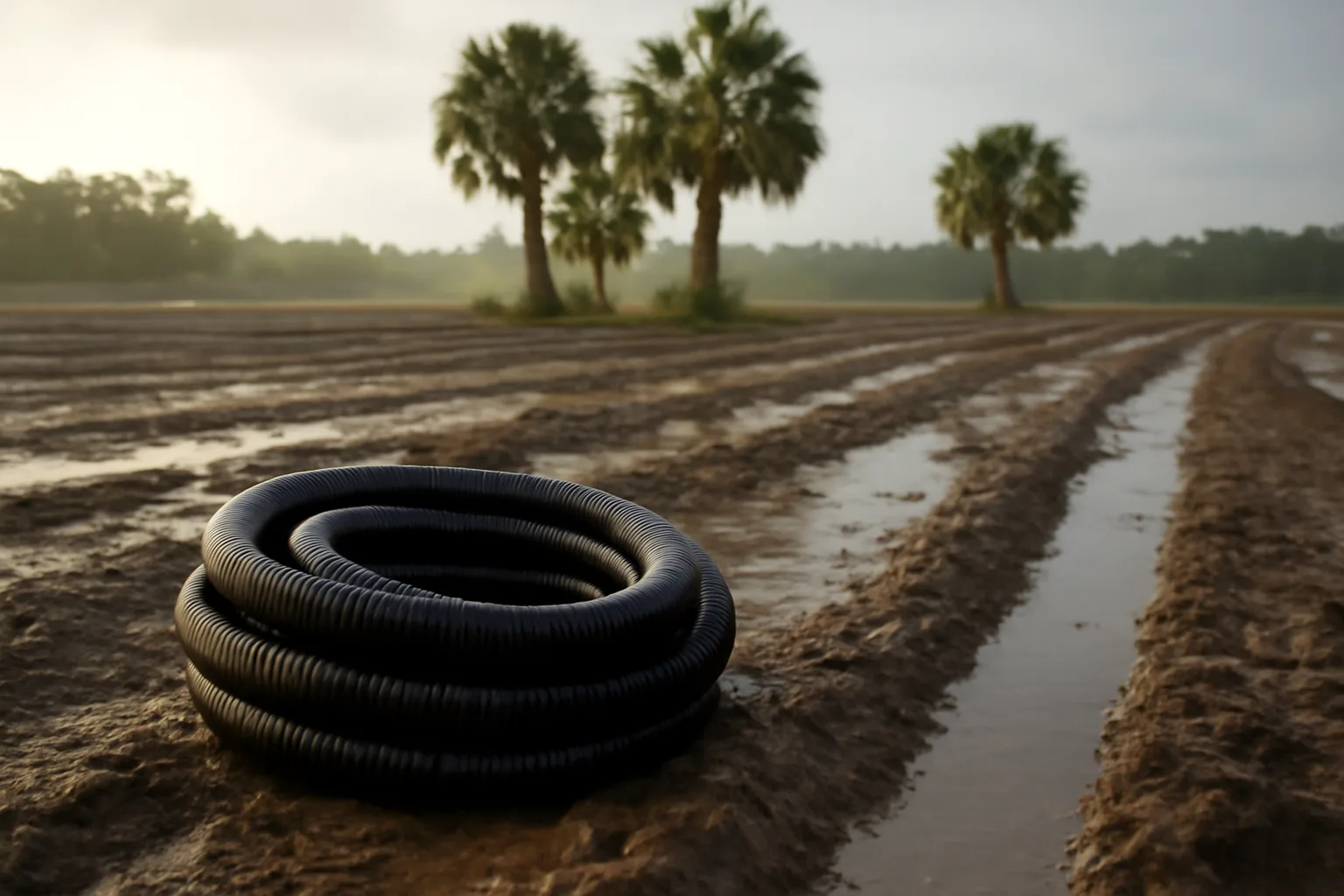
TL;DR
You do not pull a Florida drainage tile license. You form a business, then check chapter 489 contracting rules, water-district ERP triggers, and Sunshine 811. Work on your own farm sits in a different paper stack than a hired crew. Confirm every fee and license category with DBPR and the district. Statewide price and calendar claims are marketing.
How do you actually start drainage tile in Florida?
You start by deciding if this is your own farm or a service you sell. That one split drives every later form. Florida has no drainage tile card. You still may need a construction contractor license, a water-district permit, and a Sunshine 811 ticket before steel hits dirt.
Most people skip that split and copy a Midwest blog. Bad idea. A lot of Florida water control is open ditches, pumps, and district canals, not pattern tile on 40-foot centers. Tile shows up on some vegetable ground, citrus renovations, and high-water-table flats. If your outlet is a South Florida Water Management District canal, you are in a different world than a Suwannee County row-crop field.
Here is the order I would actually use. Form the business at the Florida Division of Corporations (Sunbiz) if you will invoice anyone [1]. Call the Department of Business and Professional Regulation Construction Industry Licensing Board and ask, in writing, whether your scope is certified underground utility and excavation work, a registered county license, or outside chapter 489 [2][3]. Call the water management district that covers the parcel and ask whether an environmental resource permit is in play [4][5]. Pull soils. Design laterals and mains to a published standard reviewers know (NRCS Conservation Practice Standard 606) [6]. File 811 [7]. Then bid.
Want a side-by-side of how another Gulf state handles the same start? Read how to start drainage tile in Alabama. That is Alabama paper, not Florida paper.
Do you need a license for drainage tile in Florida?
There is no Florida license titled drainage tile. If you sell excavation and buried pipe for hire, chapter 489 may still treat the work as construction contracting. The closest named category is underground utility and excavation contractor in section 489.105. Confirm the category with the Construction Industry Licensing Board before you print a truck decal [2].
People mash three different laws into one myth. Water-law ag exemptions in chapter 373 do not hand you a contractor card. Farm-building exemptions in the building code do not cover a hired tiling crew. Owner work on your own land is a different fact pattern than bidding a neighbor's 80 acres.
Section 489.105 describes an underground utility and excavation contractor as limited to construction, installation, and repair of systems that include "storm sewer collection systems" and related excavation, including open cut and trenchless methods [2]. Agricultural laterals that outlet to a ditch can look a lot like that scope. They can also sit in a gray zone if you only pull shallow farm drains on private cropland. Gray zone means you write the board. It does not mean you guess on a forum.
Certified contractors work statewide after they meet the experience and exam path in section 489.111. That statute sets a proven-experience route commonly stated as four years in the category, with education substitutions spelled out in the same section [3]. Registered contractors are a county-level path. Fees, bond, and financial-responsibility proof change. Never trust a blog for the current dollar amount. Confirm with DBPR.
Section 489.103 lists exemptions from the contracting part of chapter 489 [9]. Read the current text. Do not assume "it's agriculture, so I am exempt." I would not hire a lawyer to obtain a drainage tile license, because that license does not exist. I would spend that money on a written scope opinion from the board and on a real outlet design.
Arizona's license write-up is a useful contrast if you work both states: drainage tile license in Arizona.
What permits do Florida water districts want for tile?
Maybe none. Maybe an environmental resource permit. The trigger is the site, the wetlands, and whether you change surface waters, not the brand of corrugated pipe. Section 373.413 is the core permit statute for constructing or altering stormwater and surface-water works [4]. Ask the district that actually maps your parcel.
Florida has five water management districts (Northwest Florida, Suwannee River, St. Johns River, Southwest Florida, South Florida). A phone script that works: parcel ID, soil, whether you will cut a new ditch or only bury laterals, where the outlet lands, and whether wetlands or a district canal sit on the line. Get the answer in writing.
Section 373.406 creates exemptions, including agricultural topography work, and it also limits those exemptions [5]. Section 403.813 lists activities that do not need a DEP permit under that section [10]. Neither statute is a magic waiver for filling wetlands or tying a new pipe into a district canal. District canal connections have their own right-of-way and operations rules. I have seen more Florida jobs die on the outlet permission than on the trench.
Maintenance of an existing farm drainage system is a different conversation than a new pattern system that concentrates flow onto a neighbor or into a canal. Say which one you are doing. If you cannot say it in one sentence, you are not ready to file.
Coastal and southern jobs pick up extra layers. Mangroves, sovereign submerged lands, and South Florida pump schedules are not Midwest tile problems. If the field sits in the Everglades Agricultural Area, you are inside a managed canal network. Tile talk without the district is theater.
How much does drainage tile cost in Florida?
There is no official Florida drainage tile price. Nobody publishes a clean statewide installed-cost series for this work. Your bid will move more on the outlet, the water table, freight for pipe, and permit time than on a national per-acre myth.
I will not invent a Florida dollar-per-acre figure. Published Midwest land-grant notes discuss installed laterals in ranges that swing with resin prices, depth, and spacing. Those notes are not a Florida quote. Sandy flatwoods, coquina, and a pumped canal outlet will not price like a Sioux County, Iowa, silt loam.
Price the job in pieces, then add them. That is the only honest method I know.
| Cost piece | What actually moves it | What I would do |
|---|---|---|
| Design and survey | Field size, lidar versus boots on grade | Pay for a grade plan before you order pipe |
| Laterals | Resin, diameter, freight into Florida, depth | Get two material quotes, not one |
| Mains, outlet, pump | Canal connection, flap gate, animal guard | Price the outlet first. It kills jobs. |
| Permits and locate tickets | ERP versus exemption, 811 marks | Budget calendar time. Do not invent a fee. |
| Labor and fuel | Water table, rock, summer storms | South Florida wet-season days run short |
If a salesman quotes one number per acre with no outlet drawing, walk. If they promise EQIP will cover a set percent, walk. NRCS payment schedules change by fiscal year and practice scenario [11]. Pull the current Florida schedule from NRCS. Do not let a vendor recite last year's Iowa rate.
Waste of money: a new GPS plow before you have paid contracts. Also a waste: lawyer hours spent chasing a license name Florida does not use. Spend it on survey, outlet hardware, and a written board answer.
How long does drainage tile take in Florida?
A small, dry, already-permitted field can be a matter of days once the pipe is on site. A new system that needs district review, a canal tap, or wet-season dewatering can run months before the plow moves. There is no honest statewide install calendar. Anyone who guarantees DBPR or district timing is selling.
Break the clock into parts you can actually measure. Entity filing at Sunbiz is often quick if your paperwork is clean [1]. A contractor license, if the board says you need one, is not a weekend project. Section 489.111 is an experience and exam path, not a mail-order card [3]. Confirm current processing with DBPR. I will not invent a wait time.
Sunshine 811 is the one statutory clock you can cite. Section 556.105 requires notice "not less than 2 full business days before beginning any excavation or demolition that is not beneath the waters of the state," and it uses a longer 10-full-business-day notice when the work is beneath the waters of the state [7]. That is locate time, not install time.
Design takes as long as your survey and outlet permission. Plowing or trenching speed depends on depth, water, and whether you hit rock or buried junk. Florida's summer wet season will stop a trench that would run all week in January. I would not promise a vegetable grower a July start in the peninsula unless I already had dewatering and a dry forecast I believed.
First paid year for a new crew is mostly paper, quotes, and short jobs. If your plan requires 500 acres of pattern tile in month three, you do not have a plan.
What do you have to file before you dig in Florida?
At minimum you file a Sunshine 811 locate ticket, and you keep the ticket and marks on site. Farm fields are not a free pass. Buried gas, fiber, and rural water sit under plenty of Florida acreage. Section 556.105 sets the notice window and the excavator's duties [7]. Sunshine 811's excavator pages walk the ticket process [13].
Quote the statute when a landowner says "just go." Florida law says you give notice "not less than 2 full business days before beginning any excavation or demolition that is not beneath the waters of the state" [7]. White-line the route. Wait for the marks. Hand-dig in the tolerance zone the way the current chapter 556 text says. I would rather lose a day than hit a plastic gas line.
Trench safety is not optional because the field is pretty. OSHA 29 CFR 1926.652 requires a protective system designed under that section except when the excavation is entirely in stable rock, or it is "less than 5 feet (1.52m) in depth and examination of the ground by a competent person provides no indication of a potential cave-in" [8]. A lot of Florida tile is shallow. A lot of Florida sand still sloughs. Name a competent person. Carry the boxes or the trench shield if the cut goes deep or the sand will not stand.
Other paper depends on the site. District ERP or exemption file. County right-of-way if you cross a ditch or road. Written permission if the outlet is not on the same deed. NRCS job sheet if you want cost-share [6][11]. None of that is the 811 ticket. Do not mix the piles.
Which Florida fields are even worth tiling?
Only fields with a real outlet, a water-table problem that pipe can fix, and soils that will feed water to the laterals. Plenty of Florida acres are wet for reasons tile will not cure. If the limit is a district pump schedule, a seepage canal, or a wetland you may not drain, plastic in the ground is a very expensive hobby.
Start on Web Soil Survey and the county soil survey narrative [6]. Look at depth to seasonal high water table, hydraulic conductivity, and whether you are on sandy marine terraces, flatwoods, muck, or karst. North Florida karst is a special problem. Outletting toward a sinkhole or an old agricultural drainage well is how you buy an aquifer case. Do not do that.
NRCS Conservation Practice Standard 606 is the design language most reviewers share. It applies where a subsurface drain is needed to remove excess water from agricultural land, and it sets criteria for capacity, outlets, materials, and envelopes [6]. Sandy Florida soils often need more attention to envelopes and rodent guards than a Midwest silty clay loam. Read the current 606 text and the Florida Field Office Technical Guide addenda. Do not run a 40-foot grid because that is what a YouTube plow video used in Illinois.
South Florida vegetable ground and the Everglades Agricultural Area already live on ditches and pumps. Tile can still make sense in pockets. It does not replace the district. If you cannot sketch the flow path from lateral to main to legal outlet on one page, stop. Compare that discipline with a western start guide like how to start drainage tile in Arizona if you also bid desert irrigation drainage. Different water law. Same need for an outlet.
What equipment do you need in year one?
You need a way to hold grade, a way to open a trench or plow in pipe, and a legal outlet. You do not need a new six-figure plow to prove you are in the drainage tile Florida market. I would rent or borrow until I had signed work and a soil type I understood.
Grade is the whole game. A cheap laser on flat ground can work. GPS grade control earns its keep on long laterals and rolling fields. If you cannot explain fall in tenths per hundred feet, stay off the plow. DrainageTilePath has a $179 Grade + GPS Plow + Outlet Kit aimed at that layout step. You do not need it to use this page.
Pipe: dual-wall or single-wall corrugated polyethylene in the diameters the design calls for, plus fittings that actually match. Florida freight is real. Order from a supplier who will take returns on crushed coils. Outlets: rodent guards, riprap or a headwall, and a flap if the receiving ditch floods backward. Skip the animal guard and you will redo the outlet.
Trenchers still win in wet sand and around utilities. Plows win in long, clean laterals with few crossings. A used chain trencher plus a competent operator beats a shiny plow you cannot keep on grade. OSHA still applies if people enter the cut [8].
Do not buy a pump "just in case" without sizing the outlet. Do not buy a trailer-mounted vac until you have a locate-damage plan. Year-one money goes to survey, pipe, outlet hardware, and insurance. Toys come later.
Can NRCS or EQIP help pay for Florida tile?
Sometimes. EQIP can cost-share conservation practices, including subsurface drains that meet NRCS standards, when the county ranking and the practice scenario fit [11]. It is not a rebate you claim after you already buried mystery pipe on a weekend.
The path is: talk to the local NRCS field office before design lock, confirm practice 606 (and any companion practices such as an outlet or drainage water management) is eligible on that land use, then follow the Florida payment schedule for the current fiscal year [6][11]. Payment rates change. Eligibility changes. I will not quote a percent or a dollar per foot. Pull the schedule.
Cost-share will not save a bad outlet. It will not legalize a wetland fill. It will not replace a contractor license if DBPR says you need one. Treat NRCS as a design-quality bar and a possible cost share, not as your permitting department.
If the grower already enrolled in a Florida Department of Agriculture and Consumer Services BMP program, ask how a new drain system interacts with that notice of intent. Do not assume BMP enrollment is an ERP waiver. Different programs. Different files.
I would still design to 606 even if EQIP is not in the deal. When a neighbor floods or a district engineer asks what standard you used, "606" is an answer. "What the plow guy always does" is not.
What wetland and outlet mistakes sink Florida jobs?
Draining a wetland you did not identify, and tying into a canal or ditch you do not control. Those two errors account for most of the Florida tile disasters I hear about. Federal Clean Water Act section 404 still applies to discharges of dredged or fill material into waters of the United States [12]. Florida ERP rules can be broader than the federal line. You can need the district even when you do not need the Corps.
Nationwide permits exist for some agricultural work, including certain ditch reshaping, but a nationwide permit is not a handshake [12]. Jacksonville District draws the federal line in this state. If you are placing fill, changing a channel, or working in wetlands, stop and get a jurisdictional answer. I would rather lose a bid than discover a jurisdictional ditch after the trencher is on the clock.
Karst and old drainage wells are the north Florida version of this problem. A sinkhole is not an outlet structure. An abandoned agricultural drainage well is a groundwater problem, not a free main. If a landowner points at a hole in the limestone and smiles, you walk.
Downstream flooding is a civil problem even when the permit file is clean. Concentrating sheet flow into one pipe and dumping it on the next grove is how you fund someone else's lawyer. Put the outlet on paper. Get the easement. Size the receiving ditch.
Compare that caution with wetter northern start guides such as how to start drainage tile in Alaska only for the shared lesson: climate and water law are local. Copy-paste designs fail.
How do you set up the business paper in Florida?
File the entity with the Florida Division of Corporations if you will invoice, hire, or hold land [1]. Then get an EIN, a bank account that is not your grocery account, and the local business tax receipt if the county or city still charges one under chapter 205 [14]. Sunbiz is the state entity file. It is not a contractor license.
Insurance next. General liability sized to buried-utility risk. Auto. Inland marine if you haul a trencher. Workers' compensation is a Florida construction trap. Confirm with the Division of Workers' Compensation before you run a two-person crew. I will not recite exemption folklore. Get it in writing.
Estimates should name the outlet, the assumed water table, what 811 does not mark (private lines), and who owns delays when the district asks for more information. If you cannot write those assumptions, you are not bidding. You are hoping.
Sales tax and tangible personal property on equipment are Department of Revenue questions. Again, confirm. A Facebook group is not the Department of Revenue.
If you also chase work west of the Mississippi, keep separate paper piles. The California start path is not a template for a Hendry County ditch: how to start drainage tile in California.
What should you confirm with the board before you bid?
Confirm four things in writing: whether your scope needs a certified or registered contractor license, which license category they assign to agricultural subsurface drains, what experience proof they want, and the current fee table [2][3][9]. DrainageTilePath is an independent publisher, not a law firm and not a service company. We do not invent board fees or processing times.
Ask DBPR, not a vendor. Send the board a short scope: laterals, mains, outlet structures, trench or plow, private agricultural land, no public sewer. Attach a sketch. Save the reply. If they say you need underground utility and excavation, follow section 489.111 and the current rule chapter on applications [3]. If they say the described farm work is outside 489, keep that letter in the job file.
Confirm the same way with the water management district and, if wetlands are in play, with the Corps [4][5][12]. Confirm 811 procedures on the current Sunshine 811 excavator page [13]. Confirm NRCS payment schedules only from NRCS [11].
I would not bid a public entity or a large grower without those emails in the folder. "My cousin in Indiana said we don't need a license" is not a defense.
For another state's board-first habit, skim how to start drainage tile in Arkansas or how to start drainage tile in Colorado. Then come back and call Florida's board, because those pages are not your file.
What would I do first, and what is a waste of money?
I would pick one county I can drive, pull soils on three real parcels, and walk the outlets with a notebook. I would call DBPR and the water management district with those parcels, not with a hypothetical. I would file Sunbiz only after I knew I would invoice [1]. I would not buy a new plow.
Waste of money: national "tile license" courses. Florida does not sell that card. Waste of money: pattern-tile kits sized for 80-acre Midwest grids when your actual job is 12 acres of peppers and a ditch you do not control. Waste of money: ignoring 811 because the field looks empty [7]. Waste of money: promising a wet-season finish date.
Spend money on a surveyor or a designer who has shipped a 606 package in Florida [6]. Spend money on outlet hardware. Spend money on liability and on a competent person who will shut a trench down [8]. If you want a single checklist after you have read the statutes, use /start. Then go back and confirm every variable fact with the board and the district. That last step is the job.
Frequently asked questions
Do you need a license for drainage tile in Florida?
Florida does not issue a drainage tile license. Hired excavation and buried pipe may still fall under chapter 489 as construction contracting, often nearest the underground utility and excavation category. Owner work on your own farm is a different fact pattern. Confirm the category and current fees with the Construction Industry Licensing Board before you bid.
How much does drainage tile cost in Florida?
There is no official Florida price series. Installed cost moves with pipe freight, depth, outlet structures, pumps, and permit time. Midwest per-acre figures are not a Florida bid. Price laterals, mains, outlet, and paper as separate lines and get local quotes. Treat any single number per acre with no outlet drawing as marketing.
How long does drainage tile take in Florida?
A ready, dry field can be days of install after pipe arrives. District review, a canal tap, or summer water can push the start by months. Sunshine 811 needs at least 2 full business days by statute (10 if the work is beneath waters of the state). License and permit clocks are board and district facts. Nobody should guarantee them.
Can I tile my own farm without a contractor license?
Maybe. Chapter 489 has exemptions, and owner work is not the same as selling crews. Water-district and wetland rules still apply to the land. 811 still applies before you dig. Read sections 489.103 and 373.406 as they read today, then ask DBPR and the district about your exact parcel. Do not take forum advice as an exemption.
Which water management district do I call?
Call the district that maps the parcel: Northwest Florida, Suwannee River, St. Johns River, Southwest Florida, or South Florida. Use the parcel ID, not the mailing address. Ask whether an environmental resource permit or an exemption file is required for your laterals and outlet. Get the answer in writing before you order pipe.
Do I need an environmental resource permit to install tile?
Only if your work triggers chapter 373 and chapter 62-330 rules, or you fall outside the exemptions in sections 373.406 and 403.813. New connections, wetland impacts, and canal taps are the usual triggers. Maintenance of an existing farm drain is a different story. The district decides. Confirm on that site.
Is agricultural drainage exempt in Florida?
There are agricultural exemptions in water law, especially section 373.406, and listed permit exceptions in section 403.813. They are narrow, they change by activity, and they do not automatically waive contractor licensing or federal 404 rules. An exemption is a documented fit to current text, not a vibe because the land is a farm.
Does Sunshine 811 apply to farm fields?
Yes. If you excavate, you notify the system. Section 556.105 requires at least 2 full business days' notice for ordinary excavation and 10 full business days if the work is beneath the waters of the state. Private irrigation lines often will not be marked. Hand-dig the tolerance zone the way the current statute and Sunshine 811 rules describe.
Can I outlet tile into a sinkhole or drainage well?
No. That is how you turn a farm drain into a groundwater case. North Florida karst and old agricultural drainage wells are not outlet structures. Use a designed surface outlet you have the legal right to use, with grades and capacity that match NRCS 606. If a landowner points at a hole in the limestone, walk away from the job.
Will EQIP pay for subsurface drains in Florida?
EQIP may cost-share practice 606 when the land, ranking, and current Florida payment schedule line up. You work with the local NRCS office before construction, not after. Rates change by fiscal year. EQIP does not replace an ERP, a Corps permit, or a contractor license. Pull the current schedule from NRCS. Do not use a vendor's memory.
Do I need workers' compensation for a two-person tile crew?
Treat Florida construction crews as a workers' comp problem until the Division of Workers' Compensation says otherwise in writing. Informal "independent operator" stories fail often on excavation jobs. Confirm coverage and any exemption paperwork before the first trench. This is not the place to save a few hundred dollars.
Is a plumbing license the right card for field tile?
Almost certainly not. Field laterals that drain soil water are not a building plumbing system. The closer chapter 489 category, if any applies, is underground utility and excavation. Ask CILB with a written scope. Buying the wrong exam is a common way to waste a year.
Can I start with a county registered contractor license?
Florida still uses registered (county) and certified (statewide) contractor paths. Whether agricultural tile fits either path is a board question, not a blog question. Section 489.111 is the certified experience and exam statute. If you only work one county, ask DBPR whether registered status even exists for the category they assign.
What happens if I connect to a district canal without approval?
You can be ordered to remove the connection, face district enforcement, and own any flooding you cause downstream. Canal rights-of-way are controlled. A flap gate you welded onto a headwall is not permission. Get the district's connection rules in writing and price that wait into the contract before you promise a plant date.
Sources
- Florida Division of Corporations, Start a Business: Florida business entities that will invoice or hire file with the Division of Corporations (Sunbiz).
- Florida Statutes § 489.105 (2024): Defines contractor categories, including underground utility and excavation contractor and storm sewer collection systems.
- Florida Statutes § 489.111 (2024): Sets certified contractor examination eligibility, including the proven-experience path commonly stated as 4 years in the category.
- Florida Statutes § 373.413 (2024): Authorizes permits for construction and alteration of stormwater management systems and related surface-water works.
- Florida Statutes § 373.406 (2024): Creates exemptions from part IV of chapter 373, including agricultural topography provisions with stated limits.
- Florida Statutes § 556.105 (2024): Requires excavators to notify Sunshine 811 at least 2 full business days before ordinary excavation, and 10 full business days if the work is beneath waters of the state.
- OSHA 29 CFR 1926.652: Requires protective systems in excavations except stable rock or cuts less than 5 feet where a competent person finds no cave-in hazard.
- Florida Statutes § 489.103 (2024): Lists exemptions from construction contracting regulation under chapter 489.
- Florida Statutes § 403.813 (2024): Lists activities that do not require a permit under that section, including specified maintenance and minor works.
- U.S. EPA, Permit Program under CWA Section 404: Section 404 requires a permit for discharge of dredged or fill material into waters of the United States.
- Sunshine State One Call of Florida (Sunshine 811), Excavators: Sunshine 811 provides the locate ticket process and excavator responsibilities for Florida.
- Florida Statutes § 205.042 (2024): Authorizes municipalities to levy a local business tax, which is separate from a state contractor license.