Last updated 2026-08-18
TL;DR
Drainage tile in Arkansas costs $1,500 to $8,000 per acre installed, and most Delta row-crop systems land between $2,500 and $5,000. Materials run $0.15 to $0.60 per linear foot for four-inch corrugated poly pipe. Arkansas has no dedicated drainage tile license, but projects over $20,000 need a contractor license, and wetland or land-disturbing work can trigger permits. Most farm jobs take two to four weeks.
How much does drainage tile cost in Arkansas?
Installed drainage tile in Arkansas runs $1,500 to $8,000 per acre for a complete subsurface system. Most row-crop farmers land in the $2,500 to $5,000 range once you factor in a tile depth of 30 to 42 inches and eight- to ten-foot lateral spacing on heavier Delta soils. The spread is wide because the variables are real: soil type, field topography, outlet conditions, and how far a contractor has to haul equipment all move the number.
Material cost is easier to pin down. Corrugated polyethylene drain tile (the flexible HDPE pipe most contractors install today) costs $0.15 to $0.60 per linear foot for four-inch pipe and $0.40 to $1.20 for six-inch, depending on supplier and order volume. A single acre with 10-foot lateral spacing needs about 4,356 linear feet of laterals, so pipe alone can run $650 to $2,600 before you add mains, outlets, or labor [1].
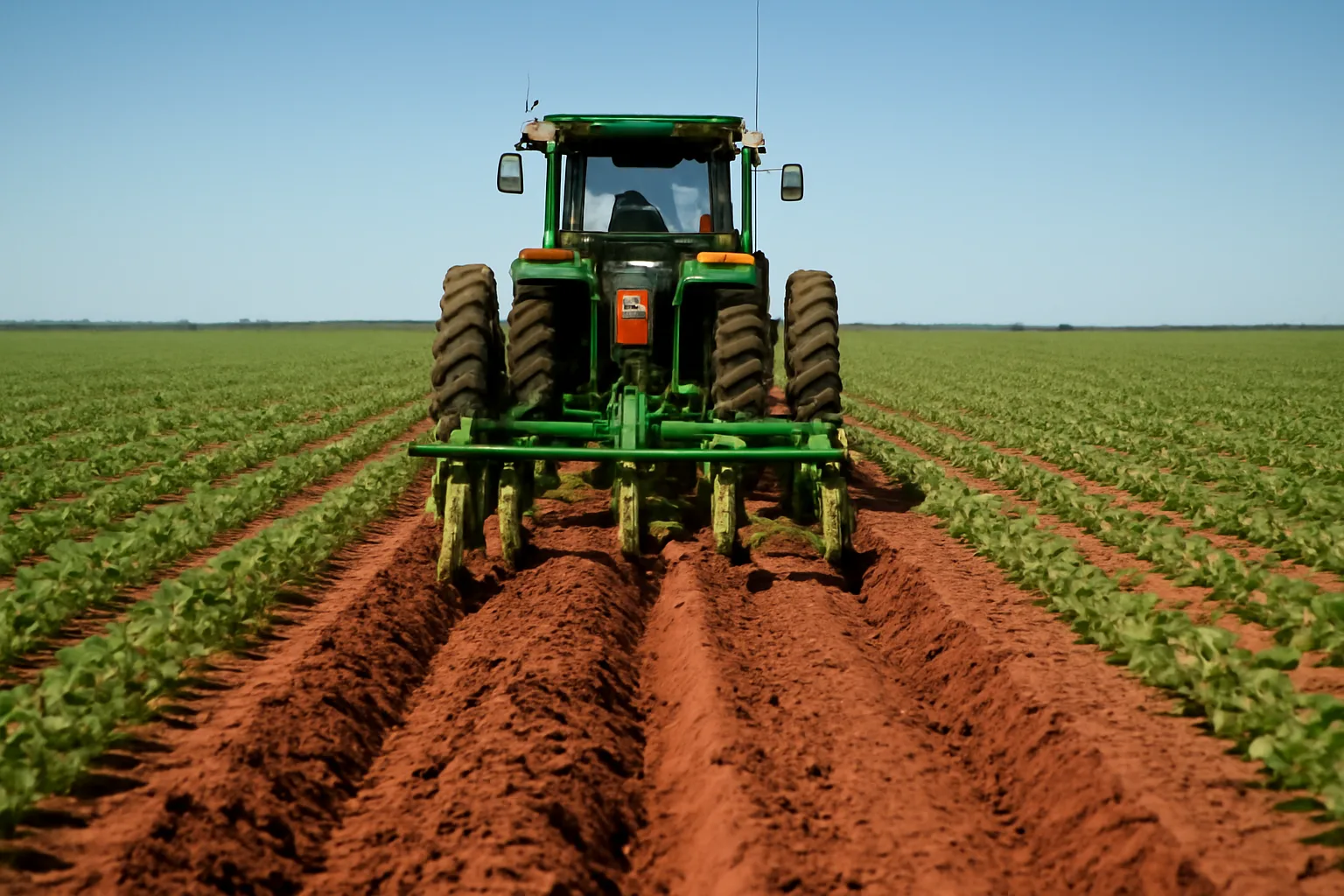
Labor and machine time is the bigger line item. Tile plow day rates in Arkansas run $800 to $1,800 depending on machine size, GPS guidance, and the contractor's overhead. An experienced crew with a two-shank GPS plow installs 8,000 to 15,000 linear feet per day on open ground. Tight fields, trees, pivot risers, and access roads cut that pace fast.
Outlet structures get underbudgeted constantly. A simple corrugated metal pipe outlet with a flap gate runs $150 to $400. A constructed drop-inlet or concrete riser runs $800 to $2,500 depending on size. On a 40-acre field with multiple mains, outlet costs can add $1,500 to $8,000 to the total.
Want a rough number before you call contractors? The University of Arkansas Cooperative Extension has published enterprise budgets for drainage that put total installed costs at $300 to $600 per acre for shallow surface systems and $1,200 to $3,500 per acre for deeper subsurface tile on typical Delta ground. Those figures are a few years old and do not capture recent material and fuel increases, so real bids today will likely run higher [2].
What factors push the cost up or down in Arkansas specifically?
Arkansas is not one drainage market. The Mississippi Delta counties in the east (Crittenden, Mississippi, Phillips) have nearly flat topography, deep alluvial soils, and a long history of tile drainage, so contractors are plentiful and experienced. The River Valley and Ozark counties in the northwest are hillier, drier, and have far fewer drainage contractors, which means mobilization costs and bids often run higher even when the system itself is smaller.
Soil texture drives spacing, and spacing is the single biggest cost lever. The USDA NRCS drainage engineering guidance recommends lateral spacing of 40 to 80 feet on well-structured silt loam soils and 10 to 30 feet on heavier clay soils [3]. Tighter spacing means more pipe, more passes, more cost. Eastern Arkansas Delta ground with high clay content almost always demands closer spacing, which pushes installed cost toward the top of the range.
Depth affects machine time and fuel burn more than material cost. Going from 24-inch depth to 42-inch depth on the same field jumps the traction requirement and fuel consumption. Contractors working deep in heavy clay charge more per foot, and rightly so.
Water table and outlet availability are the sleeper costs. If your field has no good natural outlet and you need a pump station or a connection to a drainage district main, that infrastructure can cost $5,000 to $30,000 or more before you tile a single acre. Arkansas has active drainage districts in many Delta counties, and tying into a district main can lower your outlet cost, but district assessments and connection fees vary widely. Confirm current fees with the district directly.
Contractor availability in 2024 and 2025 has been tighter than in prior years because the same GPS tile plow equipment is in demand across Missouri, Illinois, and Tennessee at the same time. Schedule your work in late summer or early winter, outside peak planting and harvest windows, and you may get better pricing and faster scheduling.
Cost comparison: drainage tile system components in Arkansas
The table below shows typical cost ranges for each component of a standard subsurface drainage tile system installed in Arkansas. These are contractor-reported ranges, not guaranteed quotes. Get at least three bids before committing.
| Component | Unit | Low | High |
|---|---|---|---|
| 4" corrugated poly lateral pipe | per linear foot | $0.15 | $0.60 |
| 6" corrugated poly main pipe | per linear foot | $0.40 | $1.20 |
| GPS tile plow installation | per linear foot | $0.18 | $0.55 |
| Outlet structure (basic flap gate) | each | $150 | $400 |
| Outlet structure (concrete riser) | each | $800 | $2,500 |
| Gravel envelope (optional) | per linear foot | $0.30 | $0.90 |
| System design and survey | per acre | $25 | $100 |
| Full installed system (Delta ground) | per acre | $2,500 | $8,000 |
| Full installed system (upland ground) | per acre | $1,500 | $4,500 |
Note: prices reflect 2024 market conditions and will vary by county, contractor, and field conditions. Confirm current quotes with local contractors and equipment suppliers.
Do you need a license to install drainage tile in Arkansas?
Arkansas has no dedicated state license for drainage tile installation the way some states license well drillers or septic installers. Still, the licensing picture is not fully clean, and three categories of law can apply depending on the scope of your project.
First, general contractor licensing. Arkansas requires a contractor license from the Arkansas Contractors Licensing Board (ACLB) for any construction project over $20,000 in total cost [4]. A drainage tile system on a 40-acre farm can easily clear that threshold. Contractors doing agricultural drainage above $20,000 are supposed to hold an ACLB license. Ask any contractor you hire to show their license number and verify it on the ACLB's public lookup before work starts.
Second, land-disturbing activity and stormwater permits. The Arkansas Department of Energy and Environment (ADEE) administers the NPDES Construction General Permit for land-disturbing activities that disturb one or more acres [5]. A large tiling job that involves significant soil disturbance for outlets, main ditches, or pump stations may require a stormwater pollution prevention plan (SWPPP) and permit coverage. Farm fields under normal agricultural use have specific exemptions, but constructed outlets and drainage structures outside the field footprint may not qualify. Confirm with ADEE whether your specific project triggers permit requirements.
Third, wetland and waterway permits. If any part of your drainage system involves filling, draining, or altering a wetland or a water of the United States, you may need a Section 404 permit from the U.S. Army Corps of Engineers and possibly a Section 401 water quality certification from ADEE [6]. This is not minor in Arkansas. The state has significant wetland acreage, particularly in Delta counties, and enforcement is real. The NRCS office in your county is a good first stop for a wetland determination on your fields before you dig.
For landowners tiling their own property (owner-builder situations), Arkansas's contractor licensing law has an owner-builder exemption, but it has conditions. Confirm the current scope with the ACLB directly.
What USDA cost-share programs are available in Arkansas for drainage tile?
This is where Arkansas farmers can change their net cost, and it stays underused. The USDA Natural Resources Conservation Service (NRCS) runs two programs that can cover a meaningful chunk of drainage tile costs on qualifying land.
The Environmental Quality Incentives Program (EQIP) is the main vehicle. EQIP Practice 606 covers subsurface drain installation and is funded in Arkansas through the state NRCS office. It has been available historically, though funding levels and ranking cutoffs change every fiscal year [7]. Payment rates are set by the state office based on local average costs. For drainage tile, EQIP payments in nearby states have run $200 to $600 per acre, and Arkansas rates sit in a similar range, but confirm current payment schedules with your local NRCS service center since they update annually.
The Agricultural Conservation Easement Program (ACEP) and the Conservation Reserve Program (CRP) are not primarily tile programs, but on wetland-adjacent acres, ACEP wetland easements sometimes fund drainage infrastructure improvements as part of a conservation plan. That is a specialized situation, worth asking about if your land sits near enrolled wetlands.
To apply for EQIP in Arkansas, you work through your local Farm Service Agency and NRCS service center. Sign-up periods open at various times during the year, and there is usually a ranking process, so projects are not guaranteed funding. The NRCS Arkansas state office keeps a list of current sign-up dates and funded practices [8].
One practical note: if you plan to apply for EQIP cost-share, do not sign a contract with a tile contractor until NRCS has approved your application and issued a practice approval. EQIP requires pre-approval. Work started before approval is not eligible for payment.
How long does drainage tile installation take in Arkansas?
A typical Arkansas farm project of 20 to 80 acres takes two to four weeks from mobilization to a completed, tested system. That assumes one contractor crew with a single tile plow, a trencher or GPS plow setup, and normal field conditions. It does not include time spent on permits, design, or contractor scheduling.
The installation pace itself is fast once the machine is in the ground. A GPS-equipped tile plow runs 8,000 to 15,000 linear feet per day on a flat, open Delta field [1]. On a 40-acre field with 10-foot spacing, you are looking at roughly 174,000 linear feet of laterals and mains combined, which is 12 to 22 machine-days of plow time at average productivity. Add setup, outlet construction, and cleanup, and three to four weeks is realistic.
Smaller projects under 10 acres can wrap in three to five days. Larger projects over 100 acres with complex outlet structures can run six to twelve weeks.
Weather is the biggest wild card. Arkansas springs and falls are wet, and a tile plow working in saturated soil leaves ruts and compaction damage that most contractors reasonably refuse to cause. The best installation windows are July through September (dry late summer) and November through January, when fields are harvested and soils have dried. Scheduling around those windows moves your timeline a lot.
Design and planning take longer than most landowners expect. A proper tile system design involves field surveying, outlet elevation confirmation, soil sampling in some cases, and a drainage plan. Allow four to eight weeks for a quality design from an agricultural engineer or an NRCS technical service provider before the first plow enters the ground.
If you are at the planning stage and want to organize your grade data, outlet siting, and pipe layout before hiring a contractor, DrainageTilePath's Grade + GPS Plow + Outlet Kit ($179 one-time at /start) gives you a structured documentation framework that some contractors will use directly to speed up field setup. It is not a substitute for a licensed engineer's drainage plan on larger or complex systems.
How do Arkansas drainage costs compare to neighboring states?
Arkansas sits in the middle of the regional range. Missouri and Illinois, with more established drainage industries and denser contractor networks, often see slightly lower per-acre installed costs simply from competition and shorter haul distances. Tennessee and Mississippi, with fewer contractors per acre of tile-able farmland, often run higher.
For context, University of Illinois extension data from 2022 put installed tile costs in central Illinois at $800 to $2,500 per acre for well-spaced systems on productive soils [9]. That lower range reflects Illinois's dense contractor market and decades of established infrastructure. Arkansas Delta ground with tighter spacing requirements typically costs more per acre than an Illinois comparison might suggest.
Comparing costs across state lines as part of a land investment or farm acquisition decision? See our breakdowns for drainage tile cost in Illinois and drainage tile cost in Alabama, which cover the regulatory and cost environment in those adjacent markets.
What should you ask a drainage tile contractor before signing in Arkansas?
Licensing verification comes first. Ask for the contractor's Arkansas Contractors Licensing Board number and look it up at the ACLB's online verification portal before any conversation about price. An unlicensed contractor on a project over $20,000 is not a minor technicality. It can expose you to liability and leave the work uninsured.
Ask whether the contractor will pull any required stormwater permits or whether that is on you. Get the answer in writing in the contract. Confirm whether the project scope requires coordination with the local drainage district if your outlet ties into district infrastructure.
Get a GPS field map of the proposed system design before work starts, not after. Good contractors design in the office and hand you a plan drawing showing tile lines, depths, outlets, and cleanout locations. If a contractor wants to 'feel it out as they go,' find someone else.
Ask about warranty. A properly installed tile system in good soil should function for 30 to 50 years. Ask what the contractor will do if a section fails to drain or a joint fails within the first year.
Get three bids. Pricing variation between Arkansas contractors can hit 30 to 50 percent on the same project scope. The lowest bid is not always wrong, but it warrants harder questions about pipe grade and outlet construction quality.
Are there drainage districts in Arkansas that affect cost and permitting?
Yes, and this is one of the most Arkansas-specific parts of the drainage tile picture. Many Delta counties have organized drainage districts, local governmental entities authorized under Arkansas Code Title 14, Chapter 120 to maintain drainage infrastructure including ditches, channels, and outlets [10]. These districts can levy annual assessments on landowners in the district based on acreage and benefit classification.
If your field is within a district's service area, connecting your tile system to the district's main drainage infrastructure may require district approval and a connection fee. The fee varies by district and is not standardized statewide. In some cases the district constructs or maintains the outlet structures, which lowers your out-of-pocket cost. In other cases you pay both a connection fee and annual assessments without getting much direct service.
Contact the county clerk or county judge's office in the relevant county to find out whether your land sits inside a drainage district boundary before you finalize your system design. The outlet elevation and connection point for your tile system may be dictated by the district's existing infrastructure, which shapes your whole system design.
How can you reduce your drainage tile cost in Arkansas without cutting corners?
The highest-value thing most landowners skip is a proper pre-installation survey. Spend $1,000 to $3,000 on field surveying and system design before you buy a foot of pipe, and you can save $5,000 to $15,000 in rework on a 40-acre system. Designing to actual field elevations means your tile runs at the right grade and your outlet works. Guessing on grade is how you end up with standing water sitting over the tile.
Buy your own pipe if you can. Some contractors accept landowner-supplied pipe, which lets you shop suppliers directly and capture the margin the contractor would otherwise add. This works best when you have a clear bill of materials from a completed design. Not every contractor will agree, so ask upfront.
Group your project with neighbors if the chance exists. A contractor who can tile 200 acres across three adjacent farms often gives a better per-acre price than the same contractor doing three separate 60-acre jobs with mobilization between each. This is common in the Delta and can cut costs by 10 to 20 percent.
Apply for EQIP before you start. This sounds obvious, but many landowners tile first and apply after, which makes them ineligible. The USDA NRCS sign-up process takes time, and the potential payment is worth the wait on any system over 20 acres [7].
For cost comparisons across other markets before you finalize your Arkansas budget, our guides on drainage tile cost in Georgia and drainage tile cost in Florida cover similar humid Southern climates with different regulatory environments.
Frequently asked questions
Do you need a license for drainage tile in Arkansas?
Arkansas has no specific drainage tile installer license, but the Arkansas Contractors Licensing Board requires a contractor license for any construction project over $20,000. A farm tile system on more than a few acres often exceeds that. Separately, land-disturbing work over one acre may require an NPDES stormwater permit from ADEE, and any wetland impacts require Army Corps Section 404 review. Confirm current requirements with the ACLB and ADEE before work starts.
How much does drainage tile cost per acre in Arkansas?
Expect $1,500 to $8,000 per acre installed for a subsurface tile system in Arkansas. Most Delta row-crop systems with 10-foot lateral spacing land in the $2,500 to $5,000 range. Upland or smaller systems with wider spacing run lower. Materials (four-inch corrugated poly pipe) cost $0.15 to $0.60 per linear foot. Outlet structures add $150 to $2,500 each depending on type. Get three contractor bids before budgeting.
How long does drainage tile installation take in Arkansas?
Most Arkansas farm projects of 20 to 80 acres take two to four weeks from mobilization to a completed system. A GPS tile plow in good conditions installs 8,000 to 15,000 linear feet per day on flat Delta ground. Design and surveying adds four to eight weeks before installation begins. Weather is the main variable; wet soil stops plow work. Best installation windows are July through September and November through January.
What size drainage tile is most common in Arkansas?
Four-inch corrugated polyethylene pipe is standard for laterals in Arkansas agricultural drainage systems. Six-inch pipe is common for submains, and eight-inch or larger handles main collectors on bigger systems. The NRCS recommends sizing mains to handle peak flow from all contributing laterals. On tight Delta clay soils, contractors sometimes use four-inch laterals on 10-foot centers flowing into six- or eight-inch mains.
Does Arkansas have USDA cost-share programs for drainage tile?
Yes. The USDA EQIP program (Practice 606, subsurface drain) is available in Arkansas through local NRCS service centers. Payment rates are set annually by the state NRCS office and vary by county. Applications must be submitted and approved before installation begins; work started before approval is not eligible. Contact your county NRCS office for current payment schedules and sign-up dates.
What permits do you need for drainage tile in Arkansas near wetlands?
Any drainage work that fills, drains, or alters a wetland or a water of the United States requires a Section 404 permit from the U.S. Army Corps of Engineers. Arkansas ADEE may also require a Section 401 water quality certification. The NRCS office can help with a wetland determination before you design your system. This is a real compliance issue in Arkansas's Delta counties, which have significant wetland coverage.
How do Arkansas drainage districts affect tile costs?
Many Delta counties have organized drainage districts under Arkansas Code Title 14, Chapter 120. If your field is in a district, connecting to district mains may require district approval, a connection fee, and ongoing annual assessments. District connection fees are not standardized statewide; contact your county clerk or county judge's office to identify the relevant district and confirm current fees before finalizing your system design.
What is the best time of year to install drainage tile in Arkansas?
Late summer (July through September) and early winter (November through January) are the most reliable installation windows in Arkansas. Late spring and early fall are typically too wet for plow work in Delta soils. A tile plow working saturated ground causes compaction and ruts that damage fields and reduce installation quality. Scheduling in a dry window also gives contractors more predictable pricing and availability.
How deep should drainage tile be installed in Arkansas?
NRCS Arkansas guidance generally recommends 30 to 42 inches for lateral depth in Delta soils, depending on field slope, soil profile, and outlet elevation. Shallower installations (24 to 30 inches) are sometimes used on fields with high water tables and limited outlet depth. Depth is constrained by your outlet elevation; you cannot tile deeper than the outlet allows. A field survey confirming outlet elevation is essential before you specify depth.
Can a landowner install their own drainage tile in Arkansas?
Arkansas's contractor licensing law has an owner-builder exemption for work on your own property, but the scope has conditions. Confirm the current specifics with the ACLB. Owner-installation is feasible on smaller projects if you own or rent a tile plow, but GPS grade control equipment is effectively required for a system that drains properly. EQIP cost-share is generally not available for owner-installed work without an approved contractor.
How much does an outlet structure cost for drainage tile in Arkansas?
A basic corrugated metal pipe outlet with a flap gate runs $150 to $400 installed. A concrete riser or drop-inlet structure costs $800 to $2,500 depending on size and construction complexity. Pump stations for fields with no gravity outlet can run $5,000 to $30,000 or more. Outlets get underbudgeted often; on a multi-acre system with several mains, total outlet costs can add $3,000 to $10,000 to the project.
How do I find a licensed drainage tile contractor in Arkansas?
Start with the Arkansas Contractors Licensing Board's online license verification tool to confirm any contractor's status before signing. Local FSA and NRCS offices often keep informal lists of contractors who have done EQIP-compliant work in the county. County extension offices and drainage district offices can provide referrals. Local Farm Bureau chapters and commodity groups sometimes maintain contractor referral networks in Delta counties.
Is drainage tile a good investment for Arkansas farmland?
On Delta soils prone to wet-weather ponding, drainage tile consistently improves yield and the timeliness of field operations. University of Arkansas extension data has documented 10 to 25 percent yield improvements on poorly drained corn and soybean acres after tile installation. Return on investment depends heavily on installed cost, commodity prices, and how many weeks of field access you gain. Nobody has universally reliable ROI data for all Arkansas soil types; talk to your county extension agent about local trial results.
Sources
- Iowa State University Extension, 'Understanding the Economics of Tile Drainage' (Ag Decision Maker A1-71): GPS tile plow productivity estimates of 8,000 to 15,000 linear feet per day and corrugated poly pipe cost ranges per linear foot
- University of Arkansas Cooperative Extension, Crop Enterprise Budgets: Installed drainage system costs of $300 to $600 per acre for surface systems and $1,200 to $3,500 per acre for subsurface tile on Arkansas Delta ground
- Arkansas Contractors Licensing Board, Licensing Requirements: Arkansas requires a contractor license for construction projects over $20,000 in total cost
- Arkansas Department of Energy and Environment, Division of Environmental Quality, Stormwater Permitting: NPDES Construction General Permit required for land-disturbing activities of one or more acres in Arkansas
- U.S. Army Corps of Engineers, Regulatory Program and Permits: Section 404 permit required for filling, draining, or altering wetlands or waters of the United States
- University of Illinois farmdoc, Farm Management field crop production resources: Installed tile costs in central Illinois of $800 to $2,500 per acre for well-spaced systems on productive soils
- Arkansas Code Title 14, Chapter 120, Drainage Districts: Arkansas drainage districts authorized under Arkansas Code Title 14, Chapter 120 to levy assessments and maintain drainage infrastructure
- Arkansas Code Annotated § 17-25-101 et seq. (Arkansas Contractors Licensing Law): Arkansas contractor licensing law statutory basis including owner-builder provisions and $20,000 threshold